• Twitter
  • rss
  • facebook

The Evolving Feminine: An Enlightened View from Kabbala

(1)

Category : Articles

This article can also be viewed in adobe pdf format.

This article was published in B’Or HaTorah: Science, the Arts and Problems of Modern life in the Light of Torah: #18, 2008 (Shamir: Jerusalem, Israel).
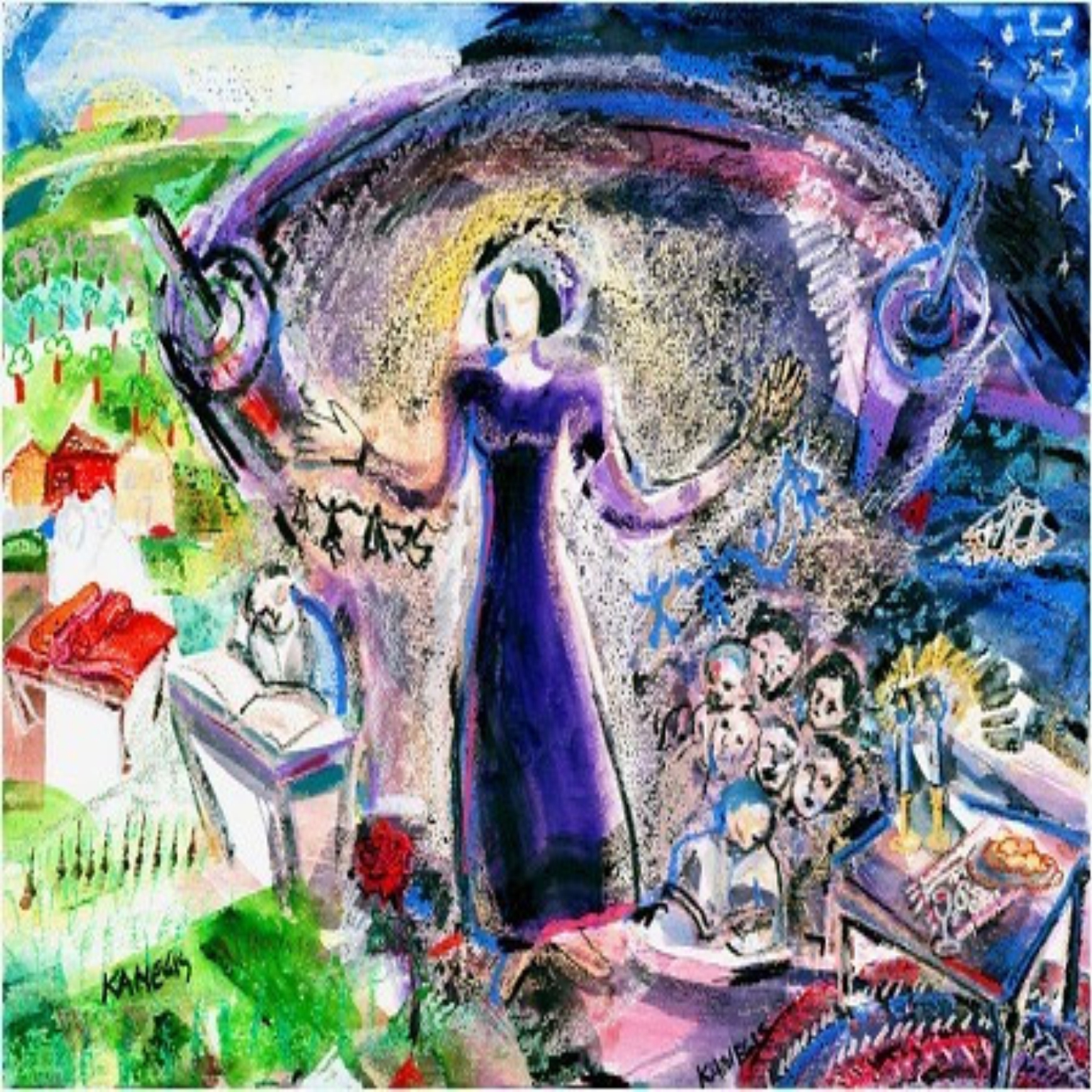
p. 135-146.

The Evolving Feminine: An Enlightened View from Kabbala

by Sarah Yehudit (Susan) Schneider

Women and Judaism is a subject oft-discussed in the yeshivot and learning institutions of the religious world. One hears many statements, spoken with apparent certainty, that Judaism says “this” about women, or Judaism says “that” about women.  And yet, upon inspection, many of the most common assertions are flawed and misleading.  They rarely present the whole truth, and often (innocently) include beliefs that contradict the more scholarly (and authoritative) tradition. Out of the vast body of diverse sources, only those statements that support the current pattern of gender relations are regularly pulled out for discussion.  They are woven together, with blinding skill, into a seamless tapestry of truths, traditions, and normative behaviors that explain and maintain the status quo.

And yet, dispersed throughout these teachings one finds a sprinkling of sources that seem to be saying something different, that appear to contradict the prevailing assumptions. They are raised…one here, one there, in isolated contexts…but there is no mention of any systematic attempt to explore them more deeply.  A question arises: “What kind of picture might emerge if all of these non-conformist statements about women would be gathered together and examined as an alternative perspective unto themselves?”

  • Delicious
  • Digg
  • Facebook
  • Google Bookmarks
  • Google Reader
  • Twitter
  • Share/Save

The Underside Of Creative Expression

(1)

Category : Articles

This article can also be viewed in adobe pdf format.

This article was published in B’Or HaTorah: Science, the Arts and Problems of Modern life in the Light of Torah: #7, 1991 [ISBN 965-293-013-X] (Shamir: Jerusalem, Israel). p. 97-105.

The Underside Of Creative Expression

by Sarah Yehudit (Susan) Schneider

Before the creative act which brought our present universe into being, G‑d existed in a state of undifferentiated, infinitely potent Light which, figuratively speaking, was equally present at every point of time and space (though time and space, themselves creations, did not yet actually exist.) This Light was so powerful that it negated even the possibility of transitory existence. Form and physicality could not maintain their boundaries in the face of it. They would be annihilated by its strength of illumination in the same way that the lights of stars are washed out by the more potent radiance of the sun, or a delicate crystal glass shatters and disintegrates from the impact of water rushing from a fire hose. In creating the physical universe, G‑d first, from our perspective, concealed His Infinite Light from a particular area and created a dark womblike vacuum within a surrounding expanse of Light.[1] Then, into this apparently “empty space” He emanated a “thin” ray of light, the unfolding and dissipation of which is the history and progression of creation as we know it.[2]

The ordered arrangement of letters within the most holy name of G‑d, the Tetragrammaton, actually maps the sequence by which the Creator fashions a physical universe out of this beam of primordial light.[3] The mechanism at first seems counter-intuitive; for it is all accomplished by increasing degrees of self constraint. Strangely, as the Infinite One imposes upon Himself a progressively more severe discipline of concealment and self control, He presses the creative process forward in a reverie of aesthetic expression.[4]

  • Delicious
  • Digg
  • Facebook
  • Google Bookmarks
  • Google Reader
  • Twitter
  • Share/Save

Evolution, Form and Consciousness

(0)

Category : Articles

This article can be viewed in pdf format.

This article was published in B’or Hatorah: Science, the Arts, and Problems of Modern Life in the Light of the Torah. #4, Summer 1984 (Shamir: Jerusalem, Israel). p. 15-38.

EVOLUTION—Form and Consciousness:

An Exploration of the Jewish and Scientific Perspectives on Creation

by Sarah Yehudit (Susan) Schneider


It is a popular misconception that Torah and science present two competing and mutually exclusive accounts of the Creation story.  However, if Jews of opposite outlooks would overcome their prejudices against such terms as G‑d and natural selection and would carefully delineate the content and context of each scenario, they would see that the two sources provide compatible—even complementary—descriptions of the origin and unfolding of life.

PARAMETERS

The first step in resolving this dispute is to diagnose the points of conflict and to clarify the limits of each account. From a Torah perspective, using the language of classical metaphysics two macrocosmic tendencies appear to be operating in the universe.

Content:

Torah is primarily concerned with consciousness, soul, mortality.  (While the history it contains is accurate, this is not its central purpose.)

Scientific theories of the origin of the species are solely concerned with the historical development of form on this planet.

CONTEXT:

Torah begins with the absolute unity of the infinite Ain Sof and describes the subsequent process of Creation and the unfolding of the diversity.  It goes forward in time, from “above” to “below”.

Scientific theory on the origin and propagation of life takes our present experience of diversity and extrapolates a hypothetical origin and process.  It goes backward in time, from “below” to “above”.

FIRST CAUSE:

Torah is premised entirely on the assumption of One G‑d as Architect and Creator of the universe.

Science is a-religious.  Proposing no theory of first cause, it neither affirms nor refutes the concept of Deity.

AUTHOR:

The Torah Creation narrative begins in the super-conscious, supra-rational omniscience of G‑d (called HaShem in Hebrew).

Evolutionary theory originates in the experience and rational mind of man.[1]

TERMINOLOGY

There is contention as well regarding the definition of “evolution” itself and the particular range of phenomena described by that term.  From a Torah perspective, using the language of classical metaphysics this paper sees two macrocosmic tendencies operating in the universe.[2]

Involution:

The Creation process whereby multiplicity emerges from the essential and indivisible unity of G‑d, called yesh m’ayin (meaning literally “something from nothing” or Creatio ex nihilo).[3] It is the means by which the apparent substance of the universe arises from the primeval incorporeality of G‑d.

Evolution:

The process of returning to the Source, called t’shuva (meaning “return”). This is the effort whereby man—and through man, all creatures— are reunified with HaShem. T’shuva is accomplished by cleaving to G‑d, fixing one’s thoughts firmly in His unity and performing the 613 mitzvot—the Commandments, laws and statutes outlined in the Torah.

Thus, according to the definitions used here, G‑d initiates involution; man initiates evolution. “For creation, heaven was prior, for perfecting earth was prior.”[4]

  • Delicious
  • Digg
  • Facebook
  • Google Bookmarks
  • Google Reader
  • Twitter
  • Share/Save

The Daughters Of Tslafchad

(0)

Category : Articles, Essays

This article can be viewed in adobe pdf format.

This teaching was published in the following publications:

Torah of the Mothes is available for purchase on amazon.com or urimpublications.com
B’Or HaTorah #11, 1991 [ISBN 965-293-055-5] (Shamir: Jerusalem, Israel). p.177-182.

בס”ד

THE DAUGHTERS OF TSLAFCHAD:

Towards A Methodology Of Attitude Around Women’s Issues

by Sarah Yehudit (Susan) Schneider

We are blessed with a Torah of timeless truths, which means that every individual can find his or her own very personal story told somewhere in its sequence of words and verses.  And since there is a one-to-one correspondence between root-souls and letters of the Torah (there being 600,000 of each) it follows, says R. Tzaddok haCohen, that each person is especially connected to the passage containing the letter that is the root of his or her particular soul.[1] And since the stories of the Torah spiral through history, each generation is also reliving some particular step in the Israelite’s forty-two stage journey from Egypt to the holy land.

A growing number of orthodox women are struggling to reconcile two aspirations which are not easily joined.  One is the longing for marriage and children, the other a passion for study and more active participation in communal life.  Successful role models are sparse and for many communities the impulse itself is questionable.  Is it a holy urge, or one prompted by secular values unsupported by spiritual truths?

The question is real for any woman who seeks to live by spiritual law and who trusts the Torah as her guide.  One method of resolution is to identify the scriptural passage that holds the archetype of this dilemma and examine its teachings for relevant advice.  The obvious place to start is with the daughters of Tslafchad who present an unusual expression of femininity that draws unanimous positive regard. The encounter between these women and Moses evokes G‑d’s unqualified praise.

A petition was presented by the daughters of Tslafchad…and they stood before Moshe, Eleazar the priest, the princes and the entire community at the door of the Tent of Meeting with the following petition, “Our father died in the desert…without leaving any sons.  Why should our father’s name be disadvantaged in his family merely because he had no son?  Give to us a portion of land along with our father’s brothers.”  Moshe brought their case before G‑d.

G‑d spoke to Moshe saying, “The daughters of Tslafchad have a just claim.  Give them a hereditary portion of land alongside their father’s brothers.  Let their father’s hereditary property thus pass over to them.  Speak to the Israelites and tell them that if a man dies and has no sons, his hereditary property shall pass over to his daughter…(Num. 27:1-9).[2]

There are many teachings in this passage, relevant both to women seeking halakhic support for the changes they are experiencing, and to the rabbis who are ruling on their questions.  The passage suggests a methodology of attitude that, if consciously adopted by both parties, will keep peace below and draw grace from on high.  This paper explores the subject from both perspectives.

  • Delicious
  • Digg
  • Facebook
  • Google Bookmarks
  • Google Reader
  • Twitter
  • Share/Save