• Twitter
  • rss
  • facebook

Rosh HaShana, 5771/2010 A Teaching by Sarah Yehudit Schneider

(0)

Category : Muse, Rosh Hashana

Rosh HaShana, 5771/2010

A Teaching by Sarah Yehudit Schneider

R. Kruspedai said in the name of R. Johanan: Three books are opened [in heaven] on Rosh HaShana, one for the wicked, one for the righteous, and one for the benoni.1 The thoroughly righteous and the thoroughly wicked are inscribed straightaway, the former in the Book of Life and the later in the Book of Death. The benoni’s fate hangs in the scales until the final reckoning on Yom Kippur.  If he uses that time to generate merit, he’ll be written into the Book of Life. But if his demerits supersede, his name appears in the Book of Death. (TB RH 16b)

This teaching on Rosh HaShana is certainly true, but not obviously so, for its exceptions outnumber its proofs. There are just too many holy souls fated with early demise, and far too many psychopaths that prosper year after year. And then there is the holocaust (and pogroms and the like) where righteous millions die in their prime while their slayers live to a ripe old age. The Talmud is teaching a much more subtle truth.

There is quantity of life and quality of life, and the Talmud, here, speaks to the latter. Yet while quantity of life is easy to measure, quality of life is hard to pin down. Its criteria vary from person to person and also shift with the stages of life.

A survey of folks throughout the world identified nine ingredients to Quality of Life: 1) health, 2) nurturing and stable family life, 3) community affiliation, 4) material wellbeing, 5) political stability, 6) climactic comfort, 7) job security, 8 ) political freedom, 9) gender parity.2 Yet even these “universal” keys to the good life cannot be what the Talmud has in mind.  True, our Rosh Hashana liturgy does include prayers for these things in its litany of requests.  Yet, is that really how we gauge whether a person made the cut—whether he entered the category of tsadik3 and earned an inscription in the Book of Life? If a person has a hard year or dies young do we assume he was judged wicked on the Days of Awe? No, it is clearly not that simple.  There are just too many exceptions to make lack-of-suffering a meaningful benchmark of spiritual standing.

So if it doesn’t guarantee longevity or freedom from travail then what is the point of this Book of Life? Why should I strive to be listed there?  To answer that question we need to explore the Talmud’s definition of “life” which most likely derives from the Torah’s use of that term:

“…Life and death I set before you… Choose life!”(Deut. 30:19)

When the Torah urges us to choose life, it is not merely banning suicide. It is directing us to choose eternal life, to prefer options that enhance the soul, for these are everlasting acquisitions. Material profits are finite. We cannot take them past the grave. They are subject to death. Self-actualization, integrity, generosity, courage, wisdom—these are gains that enrich the soul, and as such, they are permanent possessions. They are death-resistant profits. The Torah is not asking us to renounce the world and become ascetics, but it is exhorting us to give priority to eternally enduring benefits when calculating the pros and cons of a range of options. “Choose life” means: invest your assets in death-resistant securities, in ventures that enrich the soul.

Throughout the ten Days of Awe we add requests for “life” into our daily Amida.4 (This is apart from the special liturgy recited on the holydays of Rosh HaShana and Yom Kippur themselves):

“Remember us for life, O King Who desires life, and inscribe us in the Book of Life, for your sake, O Living G‑d.” [inserted into 1st blessing of Amida].

“Who is like you…Who recalls His creatures mercifully for life.” [inserted into 2nd blessing of Amida].

“Inscribe all the children of your covenant for a good life.” [Inserted into 18th blessing of Amida].

“In the book of life, blessing, and peace, good livelihood, good decrees, salvations and consolations, may we be remembered and inscribed before You—we and Your entire people the Family of Israel for a good life and for peace.” [inserted into 19th blessing of Amida].

It is clear that the primary striving of these special New Year’s prayers is to be inscribed in the coveted (and mysterious) Book of Life. Yet, while most of us interpret this as a plea for health and longevity, this is probably not the Talmud’s prime intent.
It seems more correct to view these words as a prayer for HaShem to help us accomplish the tikunim that are going to appear on our task list this year through life-empowering choices. The Torah’s #1 key to quality of life does not show up in the nine-point survey mentioned above. It is the gift of identifying the most spiritually productive option in any given moment and then picking it with a whole heart because that really is our first choice. It is the boon of genuinely preferring the option that packs the most “life”—that is maximally in line with spiritual law—for that is the one that is sure to produce the most enduring good.

Every soul comes into the world with a list of sparks that it must raise. A spark is a sliver of consciousness. The totality of sparks attached to our soul is the sum-total of lessons we will absorb in our days whether from life experience or book learning.  We acquire wisdom through wrong choices as well as right ones.  When we grab for a glittery pleasure and it turns to grit in our mouth or we suffer purgation for a wrong action that nobody even saw—the discomforting consequences of these mistakes burn spiritual law into our nerve net, and thus, despite ourselves, sparks get raised. Yet this journey through the underworld is not the path of life, for so much of the energy expended and pleasure enjoyed gets obliterated in the purgation.  The residue of eternally enduring value is minute compared to the drama of the ordeal and the losses (i.e., death) it produced.  Some portion of the sparks of every life will be raised through this adverse route.  (And for some unfortunate souls, it could even be the bulk.) Yet, the point is to learn from these falls and failures and make wiser decisions next time…to better recognize the path of life and choose it at the next turn.

For we also gather sparks along the high road, by sacrificing for integrity and picking the most spiritually productive option.  That is the “path of life” and that is what it means to be written into the Book of Life: where our commitment to life, as demonstrated by our deeds and sincerity of prayer, evokes a reciprocal response from on high. HaShem commits Himself to help us choose life, by providing opportunities from without and guidance from within.

So I want to bless us, as individuals, as a community and as members of the larger world community that we should cultivate an insatiable taste for life (in the Torah’s sense of the word)….a passion for life that is pure enough and potent enough and integrated enough to get us inscribed in the Book of Life, so that every decision we make this year should take us along the path of life and bring us, via the most efficient and least painful route possible, to the Tree of Life. And together we should greet the harbinger of life…the messianic redeemer who will carry us across the threshold to the era of eternal life.

כתיבה וחתימה טובה לכל העולם כולו

­­­­­­­­­­­­­­­­­­­­­——————————

1Benoni – Literally, Intermediate Person. The Talmud uses the term here to indicate someone whose merits and debits are equally balanced.

2 http://en.wikipedia.org/wiki/Quality-of-life_index.

3 Tsadik is the Hebrew term for the thoroughly righteous person in the Talmudic quote above.

4 Amida is the standing prayer of (now) nineteen blessings that is the central prayer in the liturgy.

  • Delicious
  • Digg
  • Facebook
  • Google Bookmarks
  • Google Reader
  • Twitter
  • Share/Save

News and Muse: Rosh Hashana 5770/2009

(1)

Category : Muse, Rosh Hashana

A Rosh HaShana Teaching, 5770/2009
by Sarah Yehudit Schneider

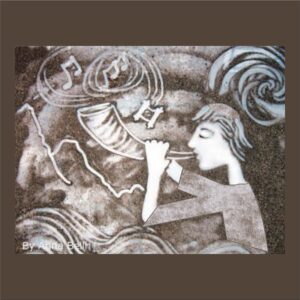
R. Isaac said: Why do we sound the shofar on Rosh HaShana? …To confound the Accuser (TB RH 16a/b).(1)
Resh Lakish said: Great is teshuva that it turns premeditated sins into errors… But did he not say that teshuva turns premeditated sins into full-fledged merits. There is no contradiction: The former is the power of teshuva when instigated by fear, the latter is the power of teshuva when prompted by love (Yoma 86b).

There are three levels of teshuva. Each of them is real, but their sticking power varies. There is 1) teshuva from suffering, 2) teshuva from fear, and 3) teshuva from love. Teshuva is the most powerful tool of transformation available to humankind. It is not a mere formality; it is a potent agent of change.
First a definition of terms: Teshuva means, literally, return, and conveys a rich constellation of meanings: 1) Spiritual Path: It describes our life-journey which is to recover our authenticity and return, improved, to our Creator. 2) Personality Inventory: It refers to our ongoing effort of self-improvement and self-reflection. 3) Repentance: It refers to the three (or sometimes five) tasks which, when performed with a whole heart, can restore a relationship to its unspoiled state before the offense that created the breach that now requires an apology.(2)

Teshuva from suffering occurs when a person cries out from the torment that is the bitter fruit of his wrong action and resolves, on the spot, to straighten his ways. This is a real teshuva, accepted by HaShem, and it is potent to bring relief. The danger, however, is that once the discomfort lightens, we lose our motivation for change, and revert back to our old ways, and another cycle begins. Teshuva from suffering is passive because the instigation for change originates from without, from the distressing circumstance. Pharoah models the downside of this teshuva, the difficulty of making it stick. Nevertheless, each time Pharoah promised to “let Israel go,” he really meant it in that moment, and HaShem responded by stopping that plague. Yet as soon as the stressor lifted, the motivation to change dissipated as well.

  • Delicious
  • Digg
  • Facebook
  • Google Bookmarks
  • Google Reader
  • Twitter
  • Share/Save

News and Muse: Rosh Hashana 5769/2008

(0)

Category : Muse, Rosh Hashana

Rosh HaShana, 5769/2008
by Sarah Yehudit Schneider

Like a shepherd…whose sheep pass beneath his staff, so shall You cause to pass, count, calculate, and consider the soul of all the living…who will live and who will die…who will rest and who will wander, who will live in harmony and who will be harried, who will enjoy tranquility and who will suffer, who will be impoverished and who will be enriched, who will be degraded and who will be exalted. But repentance, prayer and charity remove the evil of the decree.

Jewish mysticism chronicles the odyssey of seven spiritual worlds created and destroyed before our own (or eighth in the sequence). Kabbala speaks in metaphor when it states that each was a king with a universe-encompassing empire. The shards of these shattered kingdoms are called sparks, and they are the raw materials out of which our world is built. Everything that exists has a spark (or several) at its core. Each spark is a sliver of light (a synonym for consciousness in kabbala).(1)

Our cosmic task as their royal successors is to clean out the impurities and actualize the potentials of their fallen empires. HaShem gathers pile after pile of these shards and sends them down into incarnation. That’s how we all begin. Yet as newborns only part of our soul is confined to our body. The rest of our soul, the still-shattered pieces of it, remain strewn throughout the universe. Hashem leads us, moment by moment from coordinate A to coordinate B because there are fragments of ourselves, shattered pieces of our souls, that need to be recovered. When we act in a way that accomplishes Hashem’s purpose for that moment, we raise the spark and absorb its light back into ourselves. In the process, we become a sliver more enlightened. And so it goes, moment by moment, day by day, year by year, we gather sparks and become more whole. The sparks that have already been raised comprise our conscious identity. The still-fallen-sparks, connected to our soul, that lie outside our sphere of awareness constitute our unconscious self.

Our mission is to collect all the sparks connected to our soul. But not all sparks are alike. Some are a pleasure to gather, while others take blood, sweat, and a lot of tears. Some sparks lie in holy terrain while others inhabit forbidden realms. To extricate the latter entails great ordeal. Their lessons are learned (and lights are absorbed) through the school of hard knocks. Most would prefer to avoid that route but they don’t heed the signs till its way too late.
  • Delicious
  • Digg
  • Facebook
  • Google Bookmarks
  • Google Reader
  • Twitter
  • Share/Save

News and Muse: Rosh Hashana 5768/2007

(0)

Category : Muse, Rosh Hashana

A Rosh HaShana Teaching, 5768 (2007)
from A Still Small Voice
Based on R. Tsadok HaKohen, Rosh Hashana 9

When Elul (the month before Rosh HaShana) arrives we begin to exchange well-wishes for a good, sweet, healthy, joyful and bountiful year. One of the recommended practices to prepare for Rosh HaShana, is to create a prayer-vision of the best that could possibly unfold for this new year: What will it look like for ourselves and loved ones to live our lives in the most God-serving way possible, with a bounty of resources (both inner and outer), a commitment to good, and a generosity of spirit, making full use of the gifts that HaShem endowed each one of our souls? This vision expresses our deepest hopes and prayers for a year of revealed good, and inner satisfaction, where growth occurs through joy instead suffering. Of course this is what we want…or is it?
It sounds like we are hoping to press the reset button, and restart our lives with a clean slate. We are asking HaShem to cancel our karmic debts. We want to be free of the consequences produced by the chain of cause and effect that was set in motion by our wrong actions. Let bygones by bygones and let’s start anew. That sounds great, but is it really what will serve us best? From a spiritual perspective it seems a little short-sighted.

One major purpose of life’s discomforts is to provide feedback from the universe about what works and what doesn’t and how to adjust our course. Crashing into a (metaphoric) stone wall hurts for sure, but it also conveys an effective lesson about the decisions that got us there. A retrospective musing reveals clues throughout the way that could have been warning signs had we paid them sufficient heed.

In this sense our sufferings are precious, for they convey critical information. They are the symptoms of our wrong actions, the wakeup calls that prompt us to choose a different route. Without them we skip merrily along until we find ourselves at a dead end and realize that we have painted ourselves into a corner and there is not way out.

  • Delicious
  • Digg
  • Facebook
  • Google Bookmarks
  • Google Reader
  • Twitter
  • Share/Save

News and Muse: Elul 5767/2006

(0)

Category : Muse, Rosh Hashana

This Elul teaching was sponsored by Jerry Krivitzky and is dedicated to his rabbi, R. Joel Soffin in gratitude for his instruction and modeling of how to live by Jewish/Torah values.

An Elul Teaching, 2006/5767
By A Still Small Voice

These forty days between Rosh Chodesh Elul and Yom Kippur are called days of grace. They correspond to the forty days that Moshe again spent with HaShem receiving the second Tablets (replacing those that Moshe shattered in his outrage at the Golden Calf). HaShem forgave the people, replaced the Tablets, and revealed one of the deepest secrets of the universe, called the Thirteen Principles of Mercy. These are Thirteen descriptions of Divine compassion, and the vibrations created by their words, when spoken aloud in a prayer gathering, open the deepest gates inside the soul. Kabbala teaches that the grace of these forty days comes from the fact that HaShem released these love-lights into the world when He forgave the unforgivable, the idolatrous betrayal of His beloved people in this very season, »3,500 years ago.
Always, light refers to consciousness. According to Kabbala, these thirteen revelations of Divine compassion are channels that link the soul’s superconscious root (keter) with its conscious levels of mind (chokmah/binah). In some sense HaShem’s compassion depends upon our capacity to perceive that compassion, and that depends upon the state of these thirteen channels inside our soul. The more expanded the channels, the greater our capacity to absorb new light and appreciate its gift. The more constricted the channels, the greater the gap between mystery (keter) and knowledge (chokmah/binah). The conscious mind cannot grasp the fullness of Divine compassion, which then remains hidden, appearing as its opposite, and this is a painful state both for us and for Him.

  • Delicious
  • Digg
  • Facebook
  • Google Bookmarks
  • Google Reader
  • Twitter
  • Share/Save

News and Muse: Rosh Hashana 5766/2005

(0)

Category : Muse, Rosh Hashana

A Rosh HaShanna Torah, 5766/2005
from A Still Small Voice

You might be surprised to learn that not only is Rosh Hashanna the Day of Judgment (יום הדין), and the Day of Remembrance (יום הזכרון), but it is also, according to the Ari, the day of nesira (נסירה), which means literally, surgical uncoupling. This is a term used to describe the spiritual surgery, the sawing apart of Adam and Chava, who were originally created as a single androgynous being, back-to-back. Though nesira means surgical uncoupling, it only severs back-facing, addictive bonds. Its uncoupling actually initiates a higher, willful, and more rectified recoupling. (Ari, Shaar HaKavanot, RH)

In a back-to-back relationship the glue that binds the couple is from unconscious, compulsive forces that may even oppose their stated conscious intent. In contrast, a front-to-front relationship is one where the couple shares common goals and a mutuality of desire, at least to some extent.

“As below, so above.” Nesira is also the means by which the holy One created twoness in the world. At one stage in the creative process, HaShem employed the scalpel of nesira to carve out a cosmic other. Voila! Gender appears in the universe. He is called the Blessed Holy One (or man), and She is called the Shekhina (or woman).

The entire course of history (and its whole point) is for this cosmic couple to finally achieve a perfect union. They have been working on their marriage for nearly six thousand years. Eventually they will get it right. Eventually, says the Ari, they will meet and match from the crown of their heads to the soles of their feet. Yet, since each of our souls is a piece of the cosmic She, this striving for healthy (and joyous) union is also the secret (and the point) of each one of our lives.
Yet nesira is not something that happens once and for all. It occurs and recurs over time. In every relationship there are unrectified layers where the couple is enmeshed in a back-facing (dysfunctional) liaison and rectified layers where they meet eye-to-eye, heart-to-heart. With each cycle of nesira, the relationship deepens and sweetens as it turns face-to-face.

  • Delicious
  • Digg
  • Facebook
  • Google Bookmarks
  • Google Reader
  • Twitter
  • Share/Save

News and Muse: Rosh Hashana 5765/2004

(0)

Category : Muse, Rosh Hashana

בס”ד

Prayer-Visioning

The Holy Preparation for Rosh HaShana, 5765 / 2004

from a still small voice

Everyone knows that this pre Rosh HaShana period is a time for intensive soul searching.  There are many advices about what this entails.  It’s important to seize the moment, for on Rosh Hashana we receive our allocation of spiritual resources for the coming year (both individually and collectively).  The great CEO (Chief Executive Officer) in the sky gives each one of us a budget of “lights,” based on our past performance, and our proposals (our prayer-visions) for the coming year.

So in general, at least from the perspective of chassidut, the main work for this time (as opposed to the more intensive teshuva period between RH & YK) is to formulate our goals, visions, and resolutions for the coming year.  We should come to Rosh Hashana with a proposal in hand.  As if to say, “HaShem it’s worth investing in my life, because this is what I’m going to do for you this year.  The ROI (Return On Investment) is unquestionably worth your while.  This is the contribution I intend to make to your global project of tikun olam.  I’m going to improve and develop my property (my dalet amot) in the following ways (XYZ)…I’m going to contribute to the Jewish people and the planet in the following ways (XYZ).  A small investment of blessings on your part will pay off in a bounty of tikun on my part.  You will not regret your venture.”

To help us with this holy work, we are told that HaShem has left his fortified, bureaucratically protected palace, and is available in the field.  Kind of like during sukot when the President of Israel has an open house, and anyone can approach and have a moment of consultation with the Head of State.  Any other time of year a person is screened by many layers of bureaucracy.

But it’s not only that HaShem is more accessible to us, says R. Tsadok; the reverse is also true.  We are more accessible to HaShem, in the sense that our souls (and psyches) are more receptive to the flow of communication emanating from on high.

  • Delicious
  • Digg
  • Facebook
  • Google Bookmarks
  • Google Reader
  • Twitter
  • Share/Save